Common Difficulties I See In Therapy

We use different words for things we struggle with in life. Words like difficulties, disorders, mental health concerns, diagnoses, problems, or worries. In the end, whatever word we use, it means we are struggling and could use some help. As a clinical psychologist, I can spot symptoms, cluster them together and formulate a diagnosis. This is usually helpful if you need additional support like medication or a targeted treatment plan for panic attacks. Using a diagnosis communicates what’s going on for you when I write a letter to your GP or other professional giving input into your care.
Does online therapy work?

The short answer is yes, online therapy does work. When the world as we knew it ended in 2020, lots of us had to change our mindset about online therapy. We had no other option than to move from facing each other on the couch to seeing each other on a screen.
Why Men Struggle With Asking For Help

I know we suck at a lot of things. Sometimes I’m astounded by our petty wilfulness around asking for help. Somehow, being a man in midlife makes it worse. We feel that we should know the answers and act like the responsible adults we never were. So, asking for help can feel embarrassing and surprisingly attacking on the little misplaced pride we tenderly cultivate like special mushrooms in the basement of our brains.
Rest isn’t laziness: Reclaiming being in a world obsessed with doing

We like to believe that rest is something we earn — a reward waiting at the end of the to-do list, once everything is finished, once we’ve achieved enough. But the to-do list never actually ends. There’s always one more task, one more goal, one more version of “successful” just out of reach. And somewhere in the chasing, we forget the most basic truth of who we are.
We are human beings. Not human doings.
Therapy- “What types of clients come to therapy?”

How do I know if my therapist is right for me?

The therapeutic relationship you have with your therapist is a bit enigmatic if we really think about it. Here is a person who you know very little about, yet you sit in a room with them, and open up to them about things you perhaps haven’t even told you parents, friends, partner or children. And, within the confines of the four walls of the therapeutic space, you are supported to peel back your layers, and look inward toward things that you have perhaps been avoiding, running from, or even living in denial about.
That’s a whole lot of trust to put in someone whom you know very little about on a personal level! No wonder why therapy can be a daunting experience for first-timers.
That’s why it is important to find a therapist who is right for you. I honestly believe that the best therapeutic work isn’t achieved with the most experienced or “best” (however that may be defined for you) therapist. Instead, the best work happens through a strong, trusting, and healthy therapeutic relationship.
THE INSIDE STORY OF ATTACHMENT: What can Internal Family Systems Therapy offer?

How many of us have seen our own challenges with connection and relationships in our clients and their stories? And how many of us have felt the sharp pang of embarrassment when these relational challenges unexpectedly emerge between the client and ourselves? Throughout the course of my career as a mental health
social worker, attachment theory has intermittently helped me understand and navigate these challenges… up to a point. The commonly understood four
categories of attachment (secure, anxious, avoidant, disorganised) have assisted me in case conceptualisation again, up to a point.
When Responsibility Replaced Childhood: An Internal Family Systems (IFS) Perspective on “Precocious Functioning”

Some children seem remarkably mature for their age. They are often described as: old souls, very mature for their age, or just “little adults.” They’re hyper-responsible, thoughtful, emotionally insightful, and dependable. Teachers admire them, and parents sing their praises them for being so easy to care for. They rarely cause trouble and often seem wiser than their years.
From the outside, this maturity appears to be a gift. However, from an Internal Family Systems (IFS) perspective, however, this is often a sign that childhood was curtailed or interrupted.
Anxiety: What is it, and how do we treat it?

What is anxiety?
Simply put, anxiety is the fear of things that could go wrong. Anxiety’s function is survival by worrying about everything that might not go to plan. It’s like being in a large room looking for an exit. You’ve convinced yourself you are trapped, you keep looking for a way out, seeing every door and then not walking through any of them. So, you stay trapped, certain that the room will catch fire and you won’t be able to exit.
How to Say Thankyou Without Feeling Guilty
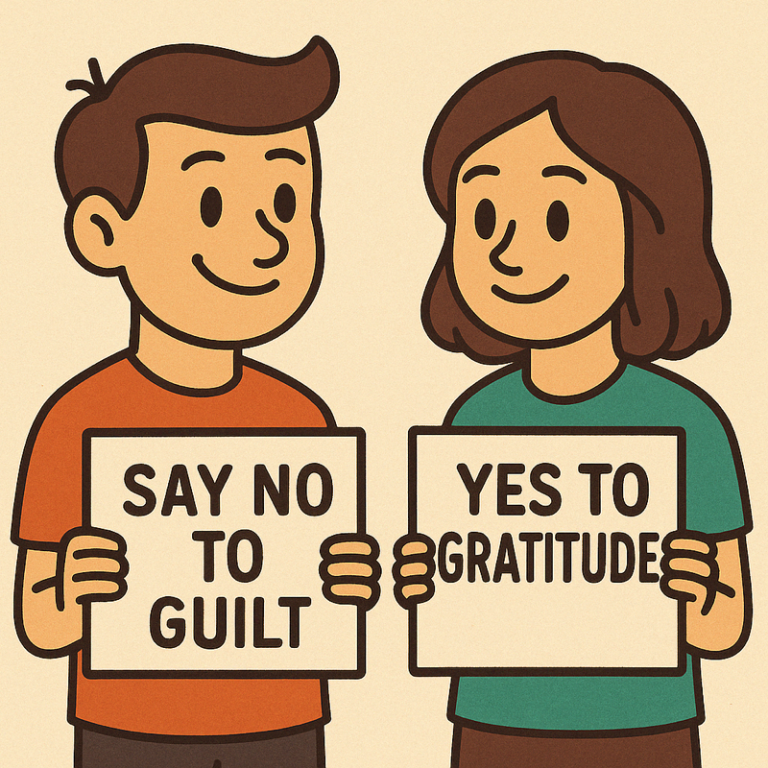
Some people seem able to ask for help from the people in their lives easily, at least it seems that way from the outside.
How do people ask for help without feeling like we are a pain? How do we know that it might strain our relationships, and how come some people seem to have such confidence when they are asking for help, while others never seem to ask? What if our ealier experiences in life taught us that pushing ourselves to the limit is an admirable thing, and taking the easier route, asking for a break, or for help, is a bit shameful?